The Canadian Scoliosis Screening Coalition
www.ScoliosisCanada.ca Site Map Contact us by email: CSSC@scoliosiscanada.ca
Links to Pre-operative procedures: Halo Gravity Traction (HGT)
ATTENTION: when children are
- A curated list.
- Popescu MB, Marie H, Ulici A, Ionescu SN, Ionescu A, Popescu IA, Herdea A. Impact of Preoperative Halo Traction on Cobb Angle Reduction in Adolescent Idiopathic Scoliosis: A Retrospective Analysis. Children (Basel). 2025 Aug 9;12(8):1045. doi: 10.3390/children12081045. PMID: 40868497; PMCID: PMC12384220."... Halo traction, a technique that involves the application of gradual axial traction through a halo device attached to the skull, has been shown to reduce Cobb angles, improve pulmonary function, and enhance spinal flexibility in patients with severe scoliosis... and assist surgical correction...it is a well-established preoperative method that facilitates safer and more effective surgical outcomes by gradually improving spinal flexibility and reducing curve severity..."
- Bauer JM, Yang S, Yaszay B, Mackenzie WGS. Pediatric Halo Use: Indications, Application, and Potential Complications. J Pediatr Soc North Am. 2024 Oct 11;9:100129. doi: 10.1016/j.jposna.2024.100129. PMID: 40432689; PMCID: PMC12088272.
Warning graphic disturbing photographs. Please view Figure 3, procedure to insert pins in child's skull and Figure 9, a pin site infection. - Grabala P, Gregorczyk J, Fani N, Galgano MA, Grabala M.
Surgical Treatment Strategies for Severe and Neglected Spinal Deformities in Children and Adolescents without the Use of Radical Three-Column Osteotomies. Journal of Clinical Medicine. 2024; 13(16):4824. https://doi.org/10.3390/jcm13164824
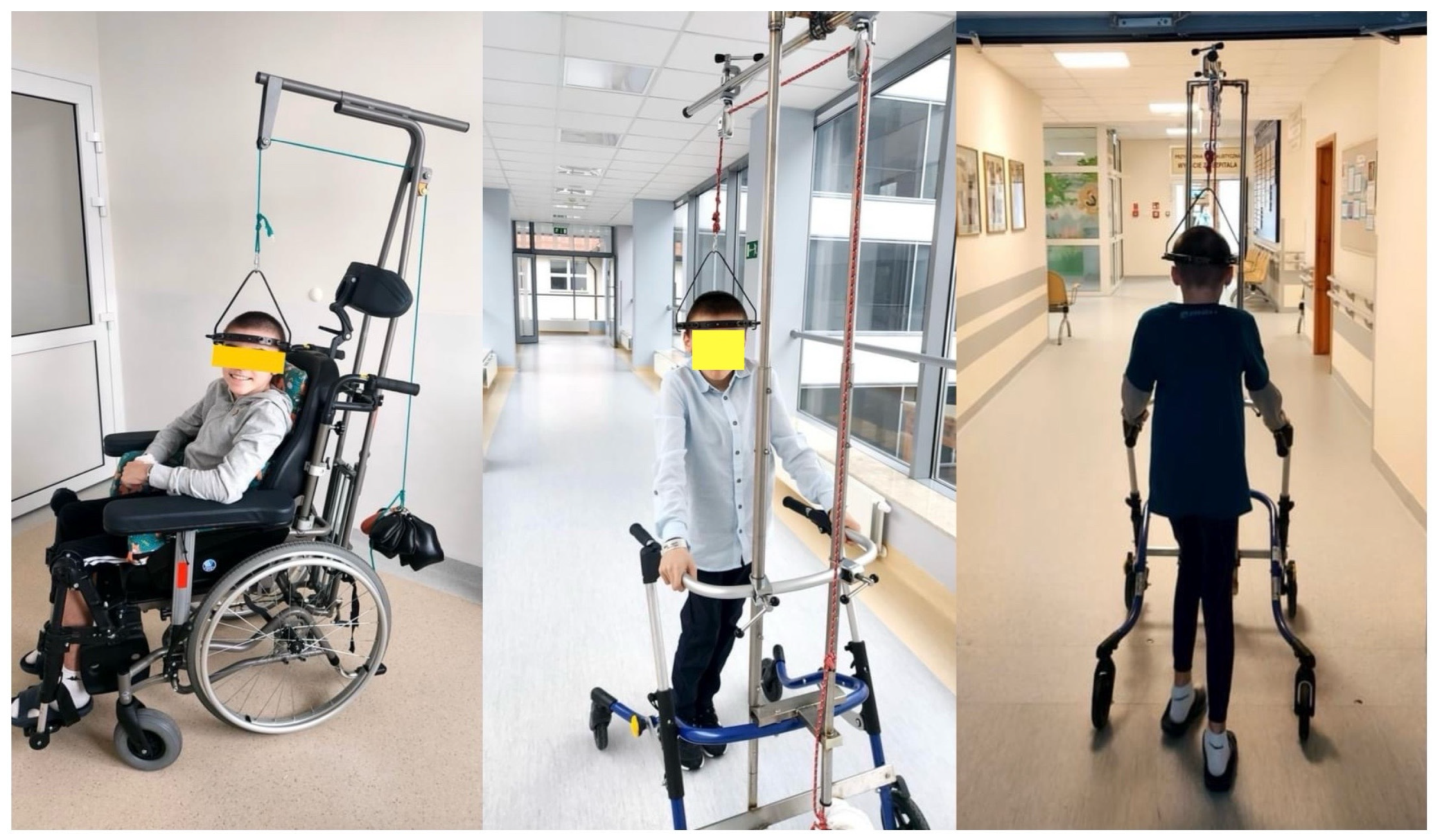
Please view Figure 1. example of a patient undergoing Halo Gravity Traction. - Rocos B, Reda L, Lebel DE, Dodds MK, Zeller R. The Use of Halo Gravity Traction in Severe, Stiff Scoliosis. J Pediatr Orthop. 2021 Jul 1;41(6):338-343. doi: 10.1097/BPO.0000000000001830. PMID: 33826561. "...Conclusion: HGT is a safe treatment for severe, stiff scoliosis because it can respond to early signs of impending neurological impairment. The first 3 weeks of treatment, reaching 50% of body weight as a traction force accounts for 80% of correction, with the remaining 20% in the following 2 weeks. At least 4 weeks of traction is recommended when following this protocol."
- Han X, Sun W, Qiu Y, Xu L, Sha S, Shi B, Yan H, Liu Z, Zhu Z. Halo Gravity Traction Is Associated with Reduced Bone Mineral Density of Patients with Severe Kyphoscoliosis. Biomed Res Int. 2016;2016:8056273. doi: 10.1155/2016/8056273. Epub 2016 Nov 8. PMID: 27896274; PMCID: PMC5118551.

Links to Paediatric Spinal Deformity Surgery (for AIS) (aka complex spine surgery) :
Revised: July 1, Aug 9, Sept 9, Dec 22, 29, 2025. April 5, May 7, 2026Below is just a curated list of publications. The primary goal of surgery for AIS treatment is to prevent curve progression and correct the deformity.
- Hannah Fonteyne, Sarah Southon Hryniuk, Eric Parent, Eric Huang, Kyle Stampe., Enhanced recovery pathway for patients with adolescent idiopathic scoliosis undergoing posterior spinal instrumentation and fusion surgery: a matched controlled analysis. Canadian Journal of Surgery Vol. 68 (6 Suppl 3) (page 4) December 12, 2025 DOI: 10.1503/cjs.020125, Abstract ID 61 Program Code CPSS05, University of Alberta, Edmonton, Alta.; Department of Surgery, University of Alberta, Edmonton, Alta.; Department of Physical Therapy, University of Alberta, Edmonton, Alta." Background: We sought to determine the impact of an enhanced recovery pathway (ERP) compared with the conventional pathway (non-ERP) on length of stay (LOS), patient-controlled analgesia (PCA), mobilization, hospital costs, and 30-day complication and readmission rates at a Canadian pediatric tertiary hospital...Conclusion: Implementation of the ERP protocol for patients with adolescent idiopathic scoliosis undergoing a PSIF led to a significant reduction in LOS, faster mobilization, and discontinuation of PCA with no increases in ED visits or readmissions."
- Chan V, Dansby J, Siegel EP, Skaggs DL, Hogue GD. Who is performing pediatric spine deformity surgery: a review of 37,443 patients. Spine Deform. 2025 Oct 30. doi: 10.1007/s43390-025-01217-6. Epub ahead of print. PMID: 41166005."...Pediatric spine surgery has traditionally been a subspecialty within pediatric orthopedics. This study aimed to analyze changes over time in the proportion of pediatric spinal deformity cases performed by orthopedic surgery and neurosurgery, and to identify trends in the practice patterns and peri-operative variables of these specialties...This was a retrospective cohort study using the National Surgical Quality Improvement Program Pediatric database (NSQIP) years 2016–2022. Inclusion criteria are patients < 18 years of age undergoing posterior spinal instrumented fusion for spinal deformity....Results There were 37,443 patients meeting inclusion criteria. Orthopedic surgery, pediatric orthopedic surgery, neurosurgery, and pediatric neurosurgery performed 8.0%, 90.4%, 0.2%, and 1.3% of the cases, respectively. From 2016 to 2022, there was an increase in the proportion of cases performed by pediatric neurosurgery from 0.7 to 1.2% and a decrease in the proportion of cases performed by pediatric orthopedic surgery from 93.2 to 87.6%...Conclusion: In the NSQIP database, the great majority of posterior spine fusions with instrumentation continue to be performed by pediatric orthopedic surgeons. Differences exist among these specialties in terms of patient demographics and perioperative surgical variables."
- Chan V, Gausper A, Chan-Tai-Kong A, Liu AM, Etigunta S, Scheer JK, Andras LM, Skaggs DL. Development and validation of a pediatric spine surgical invasiveness index. Spine Deform. 2025 Sep;13(5):1367-1376. doi: 10.1007/s43390-025-01106-y. Epub 2025 May 13. PMID: 40358891; PMCID: PMC12401766."...We utilized the NSQIP Pediatric database to identify key surgical components that contribute to increased operative time and allogeneic transfusion requirements. The proposed index aims to serve as a valuable tool for preoperative risk stratification to inform clinical decision-making and patient counseling in pediatric spinal deformity surgery..."
- Matamalas A, Bagó J, Pellisé F. Responsiveness of trunk asymmetry measurements in clinical photographs after adolescent idiopathic scoliosis surgery. Eur Spine J. 2025 Jul;34(7):2781-2787. doi: 10.1007/s00586-025-08918-6. Epub 2025 May 15. PMID: 40372456.
- Chan V, Etigunta S, Gausper A, Liu AM, Illingworth KD, Hogue GD, Hedequist DJ, Skaggs DL. Navigation is associated with lower risk of neurological injury and transfusion in pediatric idiopathic scoliosis surgery. Spine Deform. 2025 Nov;13(6):1911-1919. doi: 10.1007/s43390-025-01140-w. Epub 2025 Jun 29. PMID: 40583097; PMCID: PMC12634737."...Spinal navigation has been shown to improve accuracy with pedicle screw placement and reduce complications in adult spine patients. It remains understudied in the pediatric spine population...Spinal navigation utilizes computed tomography (CT) or three-dimensional fluoroscopy to create a three-dimensional map to help guide surgeons intraoperatively...This was a retrospective cohort study using the NSQIP pediatric database, years 2016-2022...There were 22,384 patients included in this study. Mean age was 14.4 years. Spinal navigation was used in 1879 (8.4%). Spinal navigation was associated with a reduced rate of postoperative neurological injury (no navigation: 1.2% vs. navigation: 0.6%, p = 0.02). The navigation cohort had a lower rate of allogeneic transfusion (no navigation: 12.2% vs. navigation: 8.4%, p < 0.001). There was no difference in 30 day reoperation rate...Conclusion: Spinal navigation was associated with significantly decreased rates of postoperative neurological injury and allogeneic transfusion in pediatric idiopathic scoliosis surgery, with an average of 0.4 h longer operative time."
- Lott C, Capraro A, Qiu C, Talwar D, Gordon J, Flynn JM, Anari JB, Cahill PJ.
How Does Anterior Vertebral Body Tethering Compare to Posterior Spinal Fusion for Thoracic Idiopathic Scoliosis? A Nonrandomized Clinical Trial. Clin Orthop Relat Res. 2025 Jun 19. doi: 10.1097/CORR.0000000000003575. Epub ahead of print. PMID: 40537949."...Background: Recently, there has been an increased interest in alternative surgical options for treating idiopathic scoliosis. For instance, anterior vertebral body tethering (AVBT) is an emerging surgical solution used in lieu of posterior spinal fusion (PSF). This technology has been gaining in popularity because of its potential benefits of preservation of spinal growth, motion, and functional activity....
Results: Scoliosis curves were reduced to < 50°, without unplanned return to the operating room, at 2 years in 70% (14 of 20) of patients who underwent AVBT and 100% (21 of 21) of patients who had PSF (p < 0.001).
No patients who had PSF underwent revisions ....Conclusion: Pediatric orthopaedic spine surgeons should carefully consider discussing the use of vertebral body tethering with their patients who have adolescent idiopathic scoliosis, as this evidence points to the more established technique of PSF leading to better outcomes. Additional research supporting AVBT as noninferior to PSF in radiographic and safety measures is needed before the procedure becomes widely available to patients and their families." Level of evidence: Level III, therapeutic study. - Stamiris S, Sofos C, Sarridimitriou A, Kakoulidis P, Christidis P, Stamiris D, Anestiadou E, Cheva A, Chatzianestiadou C, Christodoulou P, Karampalis C. Comparative meta-analysis of vertebral body tethering and posterior spinal fusion in patients with idiopathic scoliosis. Evaluation of radiographic, perioperative, clinical, patient-reported outcomes, and complication rates. Spine Deform. 2025 Jun 8. doi: 10.1007/s43390-025-01113-z. Epub ahead of print. PMID: 40484922.
- Zhao Y, Du Y, Yang Y, Zhang H, Li C, Sun D, Li Z, Zhang J, Wang S. What Are the Medium-term Reciprocal Changes in Cervical Sagittal Alignment After Posterior Correction for Lenke 5C Adolescent Idiopathic Scoliosis? Clin Orthop Relat Res. 2025 Mar 21;483(9):1746-1758. doi: 10.1097/CORR.0000000000003448. PMID: 40117516; PMCID: PMC12373072.
- Al-Naseem AO, Al-Naseem A, Al Balushi B, Marwan Y, Leong J, Shafafy R. Posterior spinal fusion versus vertebral body tethering for paediatric scoliosis: a meta-analysis of comparative studies. Spine Deform. 2025 May;13(3):681-694. doi: 10.1007/s43390-025-01050-x. Epub 2025 Feb 4. PMID: 39904840.
- Todderud J, Milbrandt T, Baroncini A, Petcharaporn M, Marks M, Hoernschemeyer D, Newton P, Parent S, Alanay A, Miyanji F, Lonner B, Neal K, Yaszay B, Blakemore L, Shah S, Haber L, Samdani A, Larson AN. Outcomes and complications of vertebral body tethering by patient gender. Spine Deform. 2025 Jan 15. doi: 10.1007/s43390-024-01035-2. Epub ahead of print. PMID: 39812990. “...Conclusion: Our study found that boys on average had higher body weight than girls and also higher rates of tether cord breakage and loss of correction. Despite these differences, curve correction, modulation, and reoperation rates were similar in both groups...”
- Larson AN, Todderud JE, Mathew SE, Nassr A, Sebastian AS, Potter DD, Milbrandt TA. Vertebral Body Tethering in Skeletally Immature Patients: Results of a Prospective U.S. FDA Investigational Device Exemption Study. J Bone Joint Surg Am. 2024 Dec 24. doi: 10.2106/JBJS.24.00033. Epub ahead of print. PMID: 39719007."...Conclusions: In skeletally immature patients treated in the U.S. under a prospective Investigational Device Exemption, there was a 75% rate of successful outcomes at 2 years....”
- Todderud J, Larson AN, Haft G, El-Hawary R, Price N, Anderson JT, Fitzgerald R, Chan G, Lonner B, Albert M, Hoernschemeyer D, Milbrandt TA. Matched comparison of non-fusion surgeries for adolescent idiopathic scoliosis: posterior dynamic distraction device and vertebral body tethering. Spine Deform. 2024 Oct 8. doi: 10.1007/s43390 024-00982-0. Epub ahead of print. PMID: 39377901. “Conclusion: Early results show PDDD demonstrates better index correction, reduced operative time, less blood loss, and shorter length of stay but higher rates of revision compared to a matched cohort of VBT patients at two-year follow-up.” Level of evidence: Level II, prospective cohort matched comparative study.
- Jalloh, Hulaimatu BA*; Andras, Lindsay M. MD*; Redding, Greg MD†; Villamor, Gabriela A. BS*; Yang, Joshua BA*; Skaggs, David L. MD, MMM‡. In-office Maximal Voluntary Ventilation Testing Demonstrates Pulmonary Improvement Following Posterior Spinal Fusion for Adolescent Idiopathic Scoliosis. Journal of Pediatric Orthopaedics 44(8):p 497-501, September 2024. | DOI: 10.1097/BPO.0000000000002694 “...This is the first study using office-based spirometry in an orthopaedic clinic showing improved pulmonary function with posterior spinal fusion and growth in patients with AIS” Level of Evidence: Level II.
- Whitaker, Colin M. MDa; Miyanji, Firoz MDb; Samdani, Amer F. MDc; Pahys, Joshua M. MDc; Sponseller, Paul D. MDd; Bryan, Tracey P. MAe; Newton, Peter O. MDe; Harms Study Group; Hwang, Steven W. MDc. Prospectively Collected Comparison of Outcomes Between Surgically and Conservatively Treated Patients With Adolescent Idiopathic Scoliosis. Spine 49(17):p 1210-1218, September 1, 2024. | DOI: 10.1097/BRS.0000000000004948 “...Conclusions.Surgically treated patients with AIS have improved HRQOL outcomes in several domains compared with age-matched and curve magnitude-matched nonoperatively treated patients at two-year follow-up.”
- Stencel-Allemand M, Marie-Hardy L, Khalife M, Happiette A, Moreau PE, Ilharreborde B, Ferrero E. A comparison of idiopathic scoliosis surgery between teenage years and adulthood. Eur Spine J. 2024 Jul;33(7):2688-2695. doi: 10.1007/s00586-024-08211-y. Epub 2024 Apr 9. PMID: 38592487.
- Irianto KA, Firas NR, Binti CGS, Tinduh D, Sakti YM, De Vega B. The impact of spinal fusion of adolescent idiopathic scoliosis in Salah (Islamic Prayer) movement: a retrospective case-control study. F1000Res. 2024 Jun 24;11:1054. doi: 10.12688/f1000research.124255.2. PMID: 38765242; PMCID: PMC11099510. "...This study aims to assess the influence of spinal fusion (SF) in Adolescent Idiopathic Scoliosis (AIS) during the daily Islamic prayer (Salah)....Methods: SF-AIS patients were videoed while performing Salah prayer. The kinematic documentation was assessed and compared to Salah movements of a control group of age-matched Muslim AIS patients, who had not had surgery. The prayer quality changes were subjectively classified into improved, no change/remained, and worsened, according to the Global Perceived Effect (GPE). Functional outcome and pain were assessed by the Scoliosis Research Society Questionnaire Version 30 (SRS-30)....Results: Thirty-nine women and five men (mean age±SD: 14.8±2.3 years) met the inclusion criteria, and unoperated AIS patients were used as control (twenty-two women, mean age±SD: 15.32±1.43 years). The prostrations ROM of the SF-AIS group differed significantly from the control group (p<0.05). The GPE of the prayer movement showed improvement in 36.4%, no change in 59.1%, and worsening in 4.5% of the SF-AIS patients...Moreover, a significant moderate positive correlation between the bowing ROM and pain (r=0.417, p=0.007) was also found....Conclusion: Spinal fusion positively affects AIS Islamic patients in maintaining their daily Salah movement, ROM and prayer quality. Prayer quality assessment should be given extra attention as an adjuvant of the SRS-30 questionnaire to evaluate Muslim patients."
- Sarah Hardy, Armaan K. Malhotra, Jennifer Dermott, Dilani Thevarajah, Karen D.A. Mathias, Samuel Yoon, Rajendra Sakhrekar, David E. Lebel. The impact of curve correction on patient satisfaction — Is straighter better? Canadian Journal of Surgery Vol. 67 (6 Suppl 1) November 13, 2024 doi: 10.1503/cjs.011424, CPSS-04 Abstract ID 97, (page 3) From the University of Waterloo, Waterloo, Ont.; the Hospital for Sick Children, Toronto, Ont.; the University of Toronto, Toronto, Ont. "... The aim of this study was to determine the patient and surgical factors most related to satisfaction in patients with AIS who have undergone PSF, with a focus on the impact of curve correction...Methods: Patients with AIS who had completed a pre- and postoperative Scoliosis Research Society (SRS) questionnaire ≥ 1 year after surgery were included...Conclusion: Improvement in total score, pain, self-image, mental health and satisfaction was statistically significant; however, clinical significance was exclusively achieved in the pain and self-image domains. Greater correction was only associated with higher self-image scores, with our results suggesting 47% correction produces meaningful improvement. These findings suggest cosmesis may be a concern for patients with AIS and should be considered during preoperative planning."
- Alvi MA, Kwon BK, Hejrati N, Tetreault LA, Evaniew N, Skelly AC, Fehlings MG. Accuracy of Intraoperative Neuromonitoring in the Diagnosis of Intraoperative Neurological Decline in the Setting of Spinal Surgery-A Systematic Review and Meta-Analysis. Global Spine J. 2024 Mar;14(3_suppl):105S-149S. doi: 10.1177/21925682231196514. PMID: 38632716; PMCID: PMC10964897.
- Stone, Lauren E. MDa; Ames, Christopher P. MDb; Pellise, Ferran MDc; Newton, Peter O. MDd; Upasani, Vidyadhar V MDd; Harms Study Group; Kelly, Michael P. MDd. Scoliosis Research Society-22r and Ceiling Effects: Limited Capabilities for Precision-Medicine with Adolescent Idiopathic Scoliosis. Spine ():10.1097/BRS.0000000000004993, March 19, 2024. | DOI: 10.1097/BRS.0000000000004993 "...Objective. To examine predictions of individual Scoliosis Research Society-22r (SRS-22r) questions one year after surgery for adolescent idiopathic scoliosis (AIS)....A multicenter AIS registry was queried for surgical AIS patients treated between 2002 and 2020. Preoperative data collected included standard demographic data, deformity descriptive data, and SRS-22r scores. Postoperative one-year SRS-22r scores were modeled using ordinal logistic regression. ... Results. A total of 3251 patients contributed data to the study; mean age 14.4 (±2.2) years, female 2631 (81%), major thoracic coronal curve 53°, mean lumbar 41°. C-statistic values ranged from 0.6 (poor) to 0.8 (excellent), evidence of varied predictive capabilities. Q17 (“days off work/school,” c = 0.84, ceiling achieved 75%) and Q15 (“financial difficulties,” c = 0.86, ceiling achieved 82%) had the greatest predictive capabilities while Q11 (“pain medication,” c=0.73, ceiling achieved 67%), Q10 (“appearance,” c=0.72, ceiling achieved 35%), and Q19 (“attractive,” c=0.69, ceiling achieved 37%) performed poorly....Conclusions. Prediction of individual SRS-22r item responses, perhaps most germane to AIS treatment, was poor. The prediction of less relevant outcomes, where ceiling effects are present, was greater as the models chose “5” for all responses. These ceiling effects may limit discrimination and hamper efforts at personalized outcome predictions."
- Tsirikos AI, Ahuja K, Khan M. Minimally Invasive Surgery for Adolescent Idiopathic Scoliosis: A Systematic Review. J Clin Med. 2024 Mar 29;13(7):2013. doi: 10.3390/jcm13072013. PMID: 38610778; PMCID: PMC11012693.
- Daroszewski P, Huber J, Kaczmarek K, Janusz P, Główka P, Tomaszewski M, Kotwicki T. Real-Time Neuromonitoring" Increases the Safety and Non-Invasiveness and Shortens the Duration of Idiopathic Scoliosis Surgery. J Clin Med. 2024 Mar 5;13(5):1497. doi: 10.3390/jcm13051497. PMID: 38592334; PMCID: PMC10934752.
- Orellana, Kevin J. BS*; Lee, Julianna BA*; Yang, Daniel MS*; Hauth, Lucas BS*; Flynn, John M. MD*,†. Impact of Social Determinants of Health on Adolescent Idiopathic Scoliosis Curve Severity. Journal of Pediatric Orthopaedics 44(2):p e168-e173, February 2024. | DOI: 10.1097/BPO.0000000000002529 “Conclusion: Socioeconomic status plays a significant role in the severity of AIS. Specifically, patients with lower COI tend to present with curve magnitudes beyond what is responsive to nonsurgical treatment, leading to larger curves at the time of surgery. Future work should focus on addressing social inequalities to optimize the treatment and outcomes of AIS patients.” Level of Evidence: Level III- Retrospective Comparative Study.
- Gorijala VK, Reddy RP, Anetakis KM,
Balzer J, Crammond DJ, Shandal V, Shaw JD, Christie MR, Thirumala PD. Diagnostic utility of
different types of somatosensory evoked potential changes in pediatric idiopathic scoliosis
correction surgery. Eur Spine J. 2024 Apr;33(4):1644-1656. doi: 10.1007/s00586-023-08063-y. Epub
2024 Jan 29. PMID: 38285275. “Conclusion Intraoperative SSEP monitoring can predict
perioperative neurological injury and improve surgical outcomes in pediatric scoliosis fusion surgery.”
Level of Evidence: Level 2
- Oeding JF, Siu J, O'Donnell J, Wu HH, Allahabadi S, Saggi S, Flores M, Brown K, Baldwin A, Diab M. Combined Anterior Thoracic Vertebral Body Tethering and Posterior Lumbar Tethering Results in Quicker Return to Sport and Activity Compared to Posterior Spinal Instrumented Fusion in Patients with Adolescent Idiopathic Scoliosis. Global Spine J. 2023 Dec 14:21925682231222887. doi: 10.1177/21925682231222887. Epub ahead of print. PMID: 38097271.
- Jeandel C, Ikonomoff T, Bertoncelli CM, Lo Cunsolo L, Vergillos Luna M, Monticone M, Clement JL, Rampal V, Solla F. Enhanced recovery following posterior spinal fusion for adolescent idiopathic scoliosis: A medical and economic study in a French private nonprofit pediatric hospital. Orthop Traumatol Surg Res. 2023 Oct;109(6):103626. doi: 10.1016/j.otsr.2023.103626. Epub 2023 Apr 21. PMID: 37086946. "Abstract Introduction: Little data exist on the efficacy of enhanced recovery after surgery (ERAS) protocols in patients undergoing posterior spinal fusion (PSF) for adolescent idiopathic scoliosis (AIS). Hypothesis: ERAS reduces hospital costs (HC) and length of stay (LOS) without increasing pain or complications. Materials and methods: This was a retrospective comparative medical and economic study of 2 cohorts of patients who underwent PSF for AIS: a prospective group who underwent surgery with an ERAS protocol without a specially assigned care coordinator from 2020 to 2021 (n=30) and a retrospective group (control) who received standard care from 2017 to 2018 (n=30). The key amendments to the ERAS protocol were reduced preoperative investigations, opioid-sparing analgesia, ambulation starting on postoperative day (POD) 1, early resumption of oral diet, and early transition to oral analgesics. Moreover, an intensive care unit (ICU) stay, surgical drainage, and the postoperative CT scan were no longer routine....Results: The mean age of patients undergoing surgery (14.5±1.7 years), sex ratio, curve type according to the Lenke classification, mean Cobb angle (54±12°), and the number of instrumented vertebrae (9±2) were similar in both groups (p>0.5). The HC decreased on average by 3029€ per patient. The mean LOS was 5±0.9 days in the ERAS group versus 6.5±0.6 days in the control group (p<0.001). The VAS scores on POD 1 and POD 3 were lower in the ERAS group. One postoperative complication was noted in each group. Conclusion: Implementing an ERAS protocol without a specifically assigned care coordinator for patients with AIS undergoing PSF significantly decreased HC, LOS, and early postoperative pain." Level of evidence: III; retrospective comparative study.
- Alamrani, Samia PT, MSca,b; Gardner, Adrian BM, PhD, MRCS, FRCSc; Rushton, Alison B. EdDd; Falla, Deborah PhDa; Heneghan, Nicola R. PhDa. Predictors of Relevant Changes in Pain and Function for Adolescents With Idiopathic Scoliosis Following Surgery. Spine 48(16):p 1166 1173, August 15, 2023. | DOI: 10.1097/BRS.0000000000004705
- Lambrechts MJ, Canseco JA, Toci GR, Karamian BA, Kepler CK, Smith ML, Schroeder GD, Hilibrand AS, Heller JE, Grasso G, Gottfried O, Kebaish KM, Harrop JS, Shaffrey C, Vaccaro AR. Spine Surgical Subspecialty and Its Effect on Patient Outcomes: A Systematic Review and Meta-Analysis. Spine (Phila Pa 1976). 2023 May 1;48(9):625-635. doi: 10.1097/BRS.0000000000004554. Epub 2023 Feb 28. PMID: 36856545."...Objective: To perform a systematic review and meta-analysis to identify if intraoperative or postoperative differences in outcomes exist between orthopedic and neurological spine surgeons....Conclusions: Although there is significant data heterogeneity, our meta-analysis found that neurosurgeons and orthopedic spine surgeons have similar readmission, complication, and reoperation rates regardless of the type of spine surgery performed."
- Lebel DE, Machida M, Koucheki R, Campbell F, Bath N, Koyle M, Ruskin D, Levin D, Brennenstuhl S, Stinson J. Utilization of individual components of enhanced recovery after surgery (ERAS) protocol improves post-operative outcomes in adolescent idiopathic scoliosis: a blueprint for progressive adoption of ERAS. Spine Deform. 2023 Sep;11(5):1117-1125. doi: 10.1007/s43390-023-00706-w. Epub 2023 May 26. PMID: 37233951; PMCID: PMC10425294.”...Conclusion Based on our cohort, a modified ERAS (Enhanced recovery after surgery) intervention for AIS patients results in significantly shorter LOS (Length of Stay) after surgery, reduced pain, and lower opioid consumption. The use of intrathecal morphine, NSAIDs, early removal of urinary catheter, and early ambulation when combined contributed to shorter LOS...”
- Beling, Alexandra MD*; Hresko, M. Timothy MD*; Verhofste, Bram MD*; Miller, Patricia E. MS*; Pitts, Sarah A. MD†; Glotzbecker, Michael P. MD‡. Do Adolescent Idiopathic Scoliosis Patients With Vitamin D Deficiency Have Worse Spine Fusion Outcomes?. Journal of Pediatric Orthopaedics 43(3):p e209-e214, March 2023. | DOI: 10.1097/BPO.0000000000002308 “...Conclusion: AIS patients with vitamin D deficiency (<20 ng/mL) are more likely to be younger age at time of surgery, and report lower Function, Self-image, and Total SRS-30 scores postoperatively. Further work is needed to determine whether vitamin D supplementation alters curve progression and patient outcomes...." Level of Evidence: Level II—prognostic study
- Newton PO, Parent S, Miyanji F, Alanay A, Lonner BS, Neal KM, Hoernschemeyer DG, Yaszay B, Blakemore LC, Shah SA, Bastrom TP; Harms Study Group. Anterior Vertebral Body Tethering Compared with Posterior Spinal Fusion for Major Thoracic Curves: A Retrospective Comparison by the Harms Study Group. J Bone Joint Surg Am. 2022 Dec 21;104(24):2170-2177. doi: 10.2106/JBJS.22.00127. Epub 2022 Oct 20. PMID: 37010479. Level of Evidence: Therapeutic Level III
- Mariscal G, Morales J, Pérez S, Rubio Belmar PA, Bovea-Marco M, Bas JL, Bas P, Bas T. Meta-analysis on the efficacy and safety of anterior vertebral body tethering in adolescent idiopathic scoliosis. Eur Spine J. 2023 Jan;32(1):140-148. doi: 10.1007/s00586-022-07448-9. Epub 2022 Nov 29. PMID: 36443510.
- Tetreault T, Darland H, Vu A, Carry P, Garg S. Adolescent athletes return to sports rapidly after posterior spine fusion for idiopathic scoliosis: a prospective cohort study. Spine Deform. 2023 Mar;11(2):383-390. doi: 10.1007/s43390-022-00592-8. Epub 2022 Oct 5.PMID: 36197603.
- Pahys JM, Samdani AF, Hwang SW, Warshauer S, Gaughan JP, Chafetz RS. Trunk Range of Motion and Patient Outcomes After Anterior Vertebral Body Tethering Versus Posterior Spinal Fusion: Comparison Using Computerized 3D Motion Capture Technology. J Bone Joint Surg Am. 2022 Sep 7;104(17):1563-1572. doi: 10.2106/JBJS.21.00992. Epub 2022 Jun 28. PMID: 35766407.
- Mens RH, Bisseling P, de Kleuver M, van Hooff ML. Relevant impact of surgery on quality of life for adolescent idiopathic scoliosis : a registry-based two-year follow-up cohort study. Bone Joint J. 2022 Feb;104-B(2):265-273. doi: 10.1302/0301 620X.104B2.BJJ-2021-1179.R1. PMID: 35094577. “...Aims To determine the value of scoliosis surgery, it is necessary to evaluate outcomes in domains that matter to patients. Since randomized trials on adolescent idiopathic scoliosis (AIS) are scarce, prospective cohort studies with comparable outcome measures are important. To enhance comparison, a core set of patient-related outcome measures is available. The aim of this study was to evaluate the outcomes of AIS fusion surgery at two-year follow-up using the core outcomes set....Conclusion: Relevant improvement in functioning, condition-specific and health-related QoL, self-image, and a relevant decrease in pain is shown at two-year follow-up after fusion surgery for AIS, with few adverse events.”
- Kurra, S., DeMercurio, P. & Lavelle, W.F. Comparison of operative implications between adolescent and young adult idiopathic scoliosis patients from scoliosis research society mortality and morbidity database. Spine Deform 10, 1133–1138 (2022). https://doi.org/10.1007/s43390-022-00515-7 “...Conclusions The operative implications observed with young adult idiopathic scoliosis patients may potentially result in more complex surgical procedures and operative-associated complications than their adolescent counterparts. Further studies are required and should include a larger number of cases, be prospective in nature and verifiable data.” Level of evidence II. (Note: this study supports the importance of screening adolescents, early diagnosis and treatment)
- Sarwahi, Vishal MDa; Galina, Jesse BSa; Atlas, Aaron BSa; Gecelter, Rachel BSa; Hasan, Sayyida BSa; Amaral, Terry D. MDa; Maguire, Kathleen MDb; Lo, Yungtai PhDc; Kalantre, Sarika MDd. Scoliosis Surgery Normalizes Cardiac Function in Adolescent Idiopathic Scoliosis Patients. SPINE 46(21):p E1161-E1167, November 01, 2021. | DOI: 10.1097/BRS.0000000000004060 "...Spinal deformity in adolescent idiopathic scoliosis can increase right atrial and ventricular pressures secondary to restrictive lung disease. Pulmonary hypertension leading to cor pulmonale is the most feared outcome, however mild pulmonary hypertension in adolescent idiopathic scoliosis (AIS) patients has been reported. No study has previously examined changes in the improvement of right heart function following scoliosis surgery....Conclusion: This study found 13.9% of patients with adolescent idiopathic scoliosis had elevated TRV while controls had no TRV abnormalities. Additionally, RVSP measurements demonstrated mild pulmonary hypertension in AIS patients. These abnormal values normalized postoperatively, indicating the benefits of scoliosis surgery on cardiac function in adolescent idiopathic scoliosis." Level of Evidence: 3
- Johnson, Mitchell A. BSE; Flynn, John M. MD; Anari, Jason B. MD; Gohel, Shivani BS; Cahill, Patrick J. MD; Winell, Jennifer J. MD; Baldwin, Keith D. MD, MPH, MSPT. Risk of Scoliosis Progression in Nonoperatively Treated Adolescent Idiopathic Scoliosis Based on Skeletal Maturity. Journal of Pediatric Orthopaedics 41(9):p 543-548, October 2021. | DOI: 10.1097/BPO.0000000000001929 “Conclusions: Skeletal maturity and curve magnitude have strong predictive value for future curve progression. The results presented here represent a valuable resource for orthopaedic providers regarding a patient’s risk of progression and ultimate surgical risk.”
- Lonner BS, Brochin R, Lewis R, Vig KS, Kassin G, Castillo A, Ren Y. Body Image Disturbance Improvement After Operative Correction of Adolescent Idiopathic Scoliosis. Spine Deform. 2019 Sep;7(5):741-745. doi: 10.1016/j.jspd.2018.12.005. PMID: 31495474. "Abstract... Hypothesis: Body Image Disturbance Questionnaire-Scoliosis version (BIDQ-S) is a sensitive outcomes instrument to evaluate improvements in body image-related psychosocial effects with surgical correction.... Methods: Seventy-five consecutive operative AIS patients were enrolled and completed BIDQ-S and Scoliosis Research Society-22 (SRS-22) at preoperative and two-year postoperative visits....Results: Eighty-four percent of the subjects were females, with average age at surgery of 14.4 ± 1.6 years. The mean follow-up was 2.26 years (range 2.0-4.5). The major Cobb was corrected from 50.0° ± 7.2° to 14.2° ± 5.8° (Δ = 71.3% ± 12.1%; p < .0001). There was a significant improvement in BIDQ-S scores after surgery (1.64 ± 0.51 to 1.21 ± 0.38, p < .0001). BIDQ-S improvements were correlated with change in SRS self-image (p = .0055), activity (p = .0057), mental (p = .0018), and overall mean (p = .0007) domains....Conclusion: BIDQ-S is responsive to surgical correction of AIS. The BIDQ-S is a valuable clinical outcome tool to assess the psychosocial effects of scoliosis in adolescents augmenting existing outcome instruments."
- Fernandes P, Soares Do Brito J, Flores I, Monteiro J. Impact of Surgery on the Quality of Life of Adolescent Idiopathic Scoliosis. Iowa Orthop J. 2019;39(2):66-72. PMID: 32577110; PMCID: PMC7047296. "Abstract Background: The impact of surgery on the quality of life of adolescents with idiopathic scoliosis (AIS) remains to be clarified as most of the studies are retrospective and few include quality of life questionnaires completed in the pre- and postoperative periods. Methods: Operated patients with AIS who completed preoperative and postoperative SRS-22 questionnaires were selected for evaluation. ... Results: 28 patients (27 females) with an average age of 14.4 years (min: 12 – max: 18) and an average Cobb angle of 61.46º (min: 35º– max: 98º) were retrospectively reviewed. The correction rate was 68% with a final Cobb angle of 18.97º (min: 7.37º – max: 37.6º). The Global SRS22 score and all sub domains showed a significant variation (p<0,01). Self-image, followed by mental health, were the subdomains where the mean differences was more relevant, with the highest effect dimension given by d-Cohen analyses (Self-image d-Cohen 2.51; Mental health –d-Cohen 0.86). Both mean score differences as well as global SRS22 score reached the MICD but, while 96.4% of the patients did so for self-image ,the same only happened in 50% of the patients in Mental health and global score. No clinical relevant change occurred in pain or activity domains. Conclusion: Taking into consideration the AIS natural history and the fact that the most relevant change after surgery occurs in patients’ self-esteem, the advantages of a surgical treatment should be thoroughly evaluated not only based on curve severity but also by looking at which quality of life subdomains are mostly affected and which are expected to improve in order to meet proper patient expectations." Level of evidence: III
- Duramaz A, Yılmaz S, Ziroğlu N, Bursal Duramaz B, Kara T. The effect of deformity correction on psychiatric condition of the adolescent with adolescent idiopathic scoliosis. Eur Spine J. 2018 Sep;27(9):2233-2240. doi: 10.1007/s00586 018-5639-4. Epub 2018 May 25. PMID: 29802465. “...41 consecutive patients who underwent surgery for AIS were compared with the control group of 52 healthy patients regarding the changes in the pre- and postoperative quality of life and psychiatric status of patients with deformity correction..Surgical correction of deformity in AIS provided significant improvements regarding quality of life and psychiatric condition. Spinal surgeons should be aware of the possible psychological problems of AIS patients and should keep in mind that deformity correction not only improves physical health but also improves mental health”
- Fletcher ND, Marks MC, Asghar JK, Hwang SW, Sponseller PD; Harms Study Group; Newton PO. Development of Consensus Based Best Practice Guidelines for Perioperative Management of Blood Loss in Patients Undergoing Posterior Spinal Fusion for Adolescent Idiopathic Scoliosis. Spine Deform. 2018 Jul-Aug;6(4):424-429. doi: 10.1016/j.jspd.2018.01.001. PMID: 29886914.
- Ohrt-Nissen, S., Hallager, D.W., Karbo, T. et al. Radiographic and Functional Outcome in Adolescent Idiopathic Scoliosis Operated With Hook/Hybrid Versus All-Pedicle Screw Instrumentation—A Retrospective Study in 149 Patients. Spine Deform 5, 401–408 (2017). https://doi.org/10.1016/j.jspd.2017.05.002 “Conclusions In a large consecutive cohort of AIS patients followed for a minimum of two years, we found a significantly better curve correction and less loss of correction with PS instrumentation compared to H/H. There was no significant difference in SRS-22r scores at final follow-up.” Level of Evidence: 3
- Jeans KA, Lovejoy JF, Karol LA, McClung AM. How Is Pulmonary Function and Exercise Tolerance Affected in Patients With AIS Who Have Undergone Spinal Fusion? Spine Deform. 2017 Nov;5(6):416-423. doi: 10.1016/j.jspd.2017.04.001. PMID: 29050719.
- Youn MS, Shin JK, Goh TS, Kang SS, Jeon WK, Lee JS. Relationship between cervical sagittal alignment and health-related quality of life in adolescent idiopathic scoliosis. Eur Spine J. 2016 Oct;25(10):3114-3119. doi: 10.1007/s00586 016-4488-2. Epub 2016 Mar 10. PMID: 26963762. "...Conclusions Changes in cervical sagittal parameters were significant after deformity correction in AIS patients. Correlation analysis revealed significant relationships between postoperative radiographic parameters and HRQOL. In particular, T1 slope and C2–C7 SVA were found to be significant predictors of HRQOL in AIS patient."
- Lehman RA Jr, Kang DG, Lenke LG, Sucato DJ, Bevevino AJ; Spinal Deformity Study Group. Return to sports after surgery to correct adolescent idiopathic scoliosis: a survey of the Spinal Deformity Study Group. Spine J. 2015 May 1;15(5):951-8. doi: 10.1016/j.spinee.2013.06.035. Epub 2013 Oct 5. PMID: 24099682.
- Pellegrino LN, Avanzi O. Prospective evaluation of quality of life in adolescent idiopathic scoliosis before and after surgery. J Spinal Disord Tech. 2014 Dec;27(8):409-14. doi: 10.1097/BSD.0b013e3182797a5e. PMID: 23096129.
- Bettany-Saltikov J, Weiss HR, Chockalingam N, Taranu R, Srinivas S, Hogg J, Whittaker V, Kalyan RV, Arnell T. Surgical versus non-surgical interventions in people with adolescent idiopathic scoliosis. Cochrane Database Syst Rev. 2015 Apr 24;2015(4):CD010663. doi: 10.1002/14651858.CD010663.pub2. PMID: 25908428; PMCID: PMC11167694. “...Objectives To examine the impact of surgical versus non‐surgical interventions in people with AIS who have severe curves of over 45 degrees, with a focus on trunk balance, progression of scoliosis, cosmetic issues, quality of life, disability, psychological issues, back pain, and adverse effects, at both the short term (a few months) and the long term (over 20 years)....There is currently no randomised or non‐randomised trial‐based evidence from prospective studies with a control group comparing the effectiveness of surgical to non‐surgical interventions for people with AIS with severe curves of over 45 degrees....”
- Duramaz A, Yılmaz S, Ziroğlu N, Bursal Duramaz B, Kara T. The effect of deformity correction on psychiatric condition of the adolescent with adolescent idiopathic scoliosis. Eur Spine J. 2018 Sep;27(9):2233-2240. doi: 10.1007/s00586 018-5639-4. Epub 2018 May 25. PMID: 29802465. “...41 consecutive patients who underwent surgery for AIS were compared with the control group of 52 healthy patients regarding the changes in the pre- and postoperative quality of life and psychiatric status of patients with deformity correction.. Surgical correction of deformity in AIS provided significant improvements regarding quality of life and psychiatric condition. Spinal surgeons should be aware of the possible psychological problems of AIS patients and should keep in mind that deformity correction not only improves physical health but also improves mental health”
- Han J, Xu Q, Yang Y, Yao Z, Zhang C. Evaluation of quality of life and risk factors affecting quality of life in adolescent idiopathic scoliosis. Intractable Rare Dis Res. 2015 Feb;4(1):12-6. doi: 10.5582/irdr.2014.01032. PMID: 25674383; PMCID: PMC4322590.
- Tarrant RC, OʼLoughlin PF, Lynch S, Queally JM, Sheeran P, Moore DP, Kiely PJ. Timing and predictors of return to short-term functional activity in adolescent idiopathic scoliosis after posterior spinal fusion: a prospective study. Spine (Phila Pa 1976). 2014 Aug 15;39(18):1471-8. doi: 10.1097/BRS.0000000000000452. PMID: 24875955. “Conclusion. The majority of patients with AIS can expect to return to school/college full-time by 16 weeks and unrestricted physical activity by 52 weeks after PSF. Preoperative curves greater than 70°, postoperative weight loss greater than 5 kg, and minor perioperative respiratory complication incidence independently predicted a delayed return to school/college full-time. These findings add to the current knowledge base regarding actual versus anticipated timing of return to short-term functional outcomes in this population.” Level of Evidence: 3
- Rushton PR, Grevitt MP. What is the effect of surgery on the quality of life of the adolescent with adolescent idiopathic scoliosis? A review and statistical analysis of the literature. Spine (Phila Pa 1976). 2013 Apr 20;38(9):786-94. doi: 10.1097/BRS.0b013e3182837c95. PMID: 24477054. "...Conclusion. Evidence suggests that surgery can lead to clinically important improvement in patient self-image. Surgeons and patients should be aware of the limited evidence for improvements in domains other than self-image after surgery. Surgical decision-making will also be influenced by the natural history of adolescent idiopathic scoliosis." Level of Evidence: 3
- Carreon LY, Sanders JO, Diab M, Sucato DJ, Sturm PF, Glassman SD; Spinal Deformity Study Group. The minimum clinically important difference in Scoliosis Research Society-22 Appearance, Activity, And Pain domains after surgical correction of adolescent idiopathic scoliosis. Spine (Phila Pa 1976). 2010 Nov 1;35(23):2079-83. doi: 10.1097/BRS.0b013e3181c61fd7. PMID: 20395881.
- Merola, Andrew A. MD*†; Haher, Thomas R. MD†; Brkaric, Mario MD*; Panagopoulos, Georgia PhD‡; Mathur, Samir MD*; Kohani, Omid MS III*; Lowe, Thomas G. MD§; Lenke, Larry G. MD ; Wenger, Dennis R. MD¶; Newton, Peter O. MD#; Clements, David H. III, MD**; Betz, Randal R. MD††. A Multicenter Study of the Outcomes of the Surgical Treatment Of Adolescent Idiopathic Scoliosis Using the Scoliosis Research Society (SRS) Outcome Instrument. Spine 27(18):p 2046-2051, September 15, 2002.
- Evaniew, N., Devji, T., Drew, B. et al. The surgical management of scoliosis: a scoping review of the literature. Scoliosis 10, 1 (2015). https://doi.org/10.1186/s13013-014-0026-3
- Asher M, Min Lai S, Burton D, Manna B. The reliability and concurrent validity of the scoliosis research society-22 patient questionnaire for idiopathic scoliosis. Spine (Phila Pa 1976). 2003 Jan 1;28(1):63-9. doi: 10.1097/00007632-200301010-00015. PMID: 12544958.
Long-term Studies after Paediatric Spinal Deformity Surgery (for AIS)
(aka complex spine surgery)A curated list. Revised July 7, Aug 2 2025
- Friedman AS, Koneru M, Gentile P, Clements D. Investigating the long-term outcomes and efficacy of surgical intervention in patients with adolescent idiopathic scoliosis and Cobb angles ranging between 40 and 50 degrees. Spine Deform. 2025 Mar;13(2):489-495. doi: 10.1007/s43390-024-00984-y. Epub 2024 Oct 17. PMID: 39417986. "...Conclusions: This preliminary analysis suggests that operatively managed patients may have had better long-term outcomes than non-operatively managed patients within this AIS subpopulation. These findings support the need for further prospective investigation to determine the optimal management strategy to improve evidence-based, patient-reported outcomes for AIS patients with Cobb angles between 40 and 50 degrees. " Level of evidence: Level III.
- Antonia Matamalas, Juan Bagó, Franciso Javier Sánchez, Pérez‑Grueso, Lucía Moreno‑Manzano, Javier Pizones, Carlos Villanueva1, Susana Núñez‑Pereira, Sleiman Haddad, Ferrán Pellisé Thirty years later: the lingering effects of adolescent idiopathic scoliosis surgery with third‑generation implants on quality of life Received: 3 September 2024 / Accepted: 21 December 2024 / Published online: 16 January 2025 © The Author(s), under exclusive licence to Scoliosis Research Society "...Conclusions Thirty years after surgery, AIS patients have more pain and worse physical functioning than their peers. However, the differences are not clinically relevant except for pain and physical activity. Further, on average, the former are in good clinical condition, although surgery has not normalized their lives...."
- Hoernschemeyer DG, Hawkins SD, Tweedy NM, Boeyer ME. Anterior Vertebral
Body Tethering: A Single-Center Cohort with 4.3 to 7.4 Years of Follow-up. J Bone Joint Surg Am.
2024 Oct 16;106(20):1857-1865. doi: 10.2106/JBJS.23.01229. Epub 2024 Jul 5. PMID: 38968364.
“...With >5 years of follow-up,
we observed a decrease in postoperative success, as progression of the deformity was observed in most subgroups, and an increase in the revision and suspected broken tether rates. No additional patients had conversion to a posterior spinal fusion, which may indicate long-term survivorship....” Level of Evidence: Therapeutic Level III - Kim HJ, Chang DG, Lenke LG, Pizones J, Castelein R, Trobisch PD, Watanabe K, Yang JH, Suh SW, Suk SI. Rotational Changes Following Use of Direct Vertebral Rotation in Adolescent Idiopathic Scoliosis: A Long-Term Radiographic and Computed Tomography Evaluation. Spine (Phila Pa 1976). 2024 Aug 1;49(15):1059-1068. doi: 10.1097/BRS.0000000000004869. Epub 2023 Nov 7. PMID: 37937448. “...Conclusions.The rotation regression phenomenon in AV and rotation maintenance in distal EV were observed after DVR over an average 10-year follow-up. These findings suggest that the DVR in the surgical treatment of AIS has a positive long-term effect on the stabilization of distal EV from the point of view of axial rotation.” Level of Evidence. 4.
- Gouzoulis MJ, Joo PY, Jeong S, Jabbouri SS, Moran J, Zhu JR, Grauer JN. A 10-year perspective on the question of whether surgeries for adolescent idiopathic scoliosis are "one and done"? Spine Deform. 2024 Jul;12(4):903-908. doi: 10.1007/s43390-024-00858-3. Epub 2024 Mar 31. PMID: 38555557. “...Conclusions: The current study of a large national AIS PSF population found 9.6% to undergo reoperation in the 10 years following their index operation....”
- Ohashi M, Watanabe K, Hirano T, Hasegawa K, Tashi H, Makino T, Minato K, Sato M, Kawashima H. Neck and shoulder pain in thoracic adolescent idiopathic scoliosis 10 years after posterior spinal fusion. Eur Spine J. 2024 Jun;33(6):2522-2529. doi: 10.1007/s00586-024-08233-6. Epub 2024 Apr 4. PMID: 38573384.
- Akazawa T, Kotani T, Sakuma T, Iijima Y, Torii Y, Ueno J, Yoshida A, Eguchi Y, Inage K, Matsuura Y, Suzuki T, Niki H, Ohtori S, Minami S. Long-term changes in bone mineral density following adolescent idiopathic scoliosis surgery: a minimum 34-year follow-up. Eur J Orthop Surg Traumatol. 2024 Jan;34(1):425-431. doi: 10.1007/s00590-023-03678-9. Epub 2023 Aug 11. PMID: 37566138. "...Conclusion: Significant reductions in BMD and an increased prevalence of osteopenia and osteoporosis were observed in middle-aged female AIS patients who had undergone spinal fusion. The decline in Z-scores in patients with AIS suggested that there was an accelerated loss of BMD compared with the general population.(note: this could be true of all patients with AIS, fused or not)
- Çetinkaya İ, Kuru Çolak T, Korkmaz MF, Aydoğan M. The effect of spinal range of motion on functional balance, quality of life, and perception of appearance in adolescent idiopathic scoliosis after posterior spinal fusion surgery. Ir J Med Sci. 2024 Jun;193(3):1307-1312. doi: 10.1007/s11845-023-03563-8. Epub 2023 Nov 9. PMID: 37943401. ”...Postoperative spinal limitation of motion adversely affected functional balance, quality of life, and perception of appearance. We believe that comprehensive rehabilitation approaches that improve postoperative range of motion and increase functionality are important for optimal postoperative recovery.”
- Tsirikos AI, García-Martínez S. Long Term Health-Related Quality of Life (QOL) after Paediatric Spinal Deformity Surgery and Comparison with the General Population. J Clin Med. 2023 Nov 17;12(22):7142. doi: 10.3390/jcm12227142. PMID: 38002754; PMCID: PMC10672074. “Patients with AIS, syndromic/secondary scoliosis and low/high-grade spondylolisthesis had reduced SRS-22r total/domain and EQ-5D (index/VAS) scores and higher VAS back/leg pain scores compared to the 20 29 year group but comparable scores to the 30-39 year group. Patients with spinal deformity reported improved QOL and high satisfaction after surgery which was maintained at >10 years of follow-up.”
- Frantzén, Aron BMa; Suominen, Eetu N. BM, MSca,b; Saarinen, Antti J. MD, PhDa,b,c; Ponkilainen, Ville MD, PhDc; Syvänen, Johanna MD, PhDb; Helenius, Linda MD, PhDd; Ahonen, Matti MD, PhDe; Helenius, Ilkka MD, PhDa. Association Between Lenke Classification, The Extent of Lumbar Spinal Fusion, and Health-Related Quality of Life After Instrumented Spinal Fusion for Adolescent Idiopathic Scoliosis. Spine 48(17):p 1216-1223, September 1, 2023. | DOI: 10.1097/BRS.0000000000004760 "...Lenke classification is used to define the curve type in adolescent idiopathic scoliosis (AIS). The association of Lenke classification and long-term postoperative health-related quality of life (HRQoL) remains unclear...The purpose of this study was to assess the association between Lenke classification and HRQoL in patients who underwent spinal fusion for AIS....In all, 146 consecutive patients (mean age 15.1 yr) operated for AIS between 2007 and 2019 with a minimum 2-year follow-up were included. Fifty-three (36%) patients reached the 10-year follow-up. ...In patients with Lenke 5 curves, correction of spinal deformity showed a positive correlation to SRS domains suggesting that waistline symmetry is an important outcome in these patients. In contrast, patients with Lenke 1 curves showed a negative correlation suggesting that the residual curve is not equally important in thoracic curves in terms of HRQoL. Lenke 5 and 6 groups also had lower SRS-24 scores in our subgroup with a minimum of 10-year follow-up. Patient satisfaction was lower in patients in whom the instrumentation extended below the L1....Conclusions Patients with major thoracolumbar scoliosis (Lenke 5 and 6) reported lower postoperative HRQoL scores when compared with major thoracic curves (Lenke 1 and 2) during the 10-year follow-up. Their self-image and postoperative satisfaction remained lower at the 2-year follow-up despite similar radiographic outcomes and shorter spinal fusion. Lenke classification and the extent of the lumbar spinal fusion have a predictive role in the HRQoL after instrumented spinal fusion during early and long-term follow-up."
- Stone, Lauren E. MDa; Upasani, Vidyadhar V. MDb; Pahys, Joshua M. MDc; Fletcher, Nicholas D. MDd; George, Stephen G. MDe; Shah, Suken A. MDf; Bastrom, Tracey P. MAb; Bartley, Carrie E. MAb; Lenke, Lawrence G. MDg; Newton, Peter O. MDb; Kelly, Michael P. MD, MSb; Harms Study Group. SRS-22r Self-Image After Surgery for Adolescent Idiopathic Scoliosis at 10 year Follow-up. Spine 48(10):p 683-687, May 15, 2023. | DOI: 10.1097/BRS.0000000000004620 "...Objective. To examine SRS-Self Image scores at up to 10 years after surgery for adolescent idiopathic scoliosis (AIS)....Data from 4608 patients contributed data to the longitudinal model; 162 had 1-year and 10-year data.... Conclusion. Ten years after surgery, 75% of patients reported similar or better SRS-Self Image scores than one year after surgery. Nearly 25% of patients reported worsening self-image at 10 years. Patients who worsened had lower baseline SRS-Self Image scores, without radiographic or mental health differences at baseline or follow-up."
- Jakkepally S, Viswanathan VK, Shetty AP, Hajare S, Kanna RM, Rajasekaran S. The analysis of progression of disc degeneration in distal unfused segments and evaluation of long-term functional outcome in adolescent idiopathic scoliosis patients undergoing long-segment instrumented fusion. Spine Deform. 2022 Mar;10(2):343-350. doi: 10.1007/s43390-021-00428-x. Epub 2021 Oct 20. PMID: 34669167. "...Purpose: To analyse the progression of disc degeneration in distal unfused lumbar segments in post-operative Adolescent Idiopathic Scoliosis (AIS) patients; and to evaluate pre-operative and post-operative radiological parameters associated with progressive disc degeneration. Methods: A retrospective study of patients, who underwent surgery for AIS between 2006 and 2013 at a tertiary-care spine hospital, was conducted. Only patients aged between 11 and 18 years, who underwent deformity correction surgery with pedicle screw-only constructs, minimum of 6.5 year follow-up, and complete radiological data, and were included. ...Conclusion: 74% of AIS patients demonstrated no signs of progressive disc degeneration at an average follow-up of 9.1 years. 26% (15/58) of AIS patients demonstrated progressive disc degeneration, among whom, degeneration progressed by only 1 Pfirrmann's grade in 74% (11/15). In the remaining four patients, disc degeneration progressed to Pfirrmann's grades 3 or greater. There was no correlation between higher grades of disc degeneration and lower instrumented vertebra (LIV) or functional outcomes scores (SRS-22)."
- Larson, A.N., Baky, F., Ashraf, A. et al. Minimum 20-Year Health-Related Quality of Life and Surgical Rates After the Treatment of Adolescent Idiopathic Scoliosis. Spine Deform 7, 417–427 (2019). https://doi.org/10.1016/j.jspd.2018.09.003 "...Conclusion We found a low rate of adult scoliosis surgery in the braced population, and a low rate of revision surgery at the 30-year follow-up in patients undergoing spine fusion for AIS between 1975 and 1992. No detected differences in patient-reported outcomes were found between the braced, surgical, and observed populations at a mean of 30 years’ follow-up."Level of Evidence Level III, therapeutic.
- Helenius L, Diarbakerli E, Grauers A, Lastikka M, Oksanen H, Pajulo O, Löyttyniemi E, Manner T, Gerdhem P, Helenius I. Back Pain and Quality of Life After Surgical Treatment for Adolescent Idiopathic Scoliosis at 5-Year Follow-up: Comparison with Healthy Controls and Patients with Untreated Idiopathic Scoliosis. J Bone Joint Surg Am. 2019 Aug 21;101(16):1460 1466. doi: 10.2106/JBJS.18.01370. Erratum in: J Bone Joint Surg Am. 2021 Feb 3;103(3):e13. doi: 10.2106/JBJS.ER.18.01370. PMID: 31436653. ”... Conclusions: Patients who underwent posterior spinal fusion with pedicle screws experienced improved back pain and health-related quality of life compared with patients with untreated AIS. Patients in the surgical treatment group had similar health-related quality of life to that of the healthy control group, except for function, which was significantly lower.” Level of Evidence: Therapeutic Level III
- Louer, Craig Jr. MD; Yaszay, Burt MD; Cross, Madeline MPH; Bartley, Carrie E. MA; Bastrom, Tracey P. MA; Shah, Suken A. MD; Lonner, Baron MD; Cahill, Patrick J. MD; Samdani, Amer MD; Upasani, Vidyadhar V. MD; Newton, Peter O. MD. Ten-Year Outcomes of Selective Fusions for Adolescent Idiopathic Scoliosis. The Journal of Bone and Joint Surgery 101(9):p 761-770, May 1, 2019. | DOI: 10.2106/JBJS.18.01013 "...The purpose of this study was to report 10-year prospective radiographic and patient-rated outcomes of selective fusions of the main thoracic (MT) or thoracolumbar/lumbar (TL/L) curve, with particular attention to the behavior of the uninstrumented, compensatory curve....Results: Fifty-one patients with selective fusions (21 MT and 30 TL/L) for adolescent idiopathic scoliosis who had been followed for at least 10 years were identified. The instrumented MT and TL/L curves were corrected by an average of 51% and 60%, respectively, at 10 years. The uninstrumented, compensatory curves had gradual spontaneous correction that approached the magnitude of the fused curve at 5 years postoperatively, with the correction maintained at 10 years. This led to excellent coronal balance. A subgroup of patients had recent progression of the primary curve adjacent to the prior fusion or within the instrumented segments, resulting in a compensatory progression of the uninstrumented curve. On the whole, SRS scores did not decrease during follow-up, and no patient had secondary operations. Conclusions: Selective fusion of a primary thoracic or lumbar curve in properly selected patients with adolescent idiopathic scoliosis will result in spontaneous correction of the uninstrumented curve and a durable result for at least 10 years." Level of Evidence: Therapeutic Level IV.
- Ghandhari H, Ameri E, Nikouei F, Haji Agha Bozorgi M, Majdi S, Salehpour M. Long-term outcome of posterior spinal fusion for the correction of adolescent idiopathic scoliosis. Scoliosis Spinal Disord. 2018 Aug 2;13:14. doi: 10.1186/s13013-018-0157-z. PMID: 30123840; PMCID: PMC6090875. "...Adolescent idiopathic scoliosis (AIS) is the most common form of idiopathic scoliosis, and surgery is considered as one of the therapeutic options. However, it is associated with a variety of irreversible complications, in spite of the benefits it provides. Here, we evaluated the long-term outcome of posterior spinal fusion (PSF) of AIS to shed more light on the consequences of this surgery....In a cross-sectional study, a total of 42 AIS patients who underwent PSF surgery were radiographically and clinically inspected for the potential post-operative complications....In spite of the efficacy and safety of PSF surgery of AIS, it might result in irreversible complications such as DDD. Moreover, the amount of post-operative disability might increase over the time and should be discussed with the patients." (note: DDD might result whether or not PSF surgery was performed and is possibly associated with disease progression of AIS)
- Akazawa T, Kotani T, Sakuma T, Minami S, Torii Y, Orita S, Inage K, Fujimoto K, Shiga Y, Inoue G, Miyagi M, Saito W, Ohtori S, Niki H. Midlife changes of health-related quality of life in adolescent idiopathic scoliosis patients who underwent spinal fusion during adolescence. Eur J Orthop Surg Traumatol. 2018 Feb;28(2):177-181. doi: 10.1007/s00590-017-2027-4. Epub 2017 Aug 10. PMID: 28798984.
- Zacharia B, Subramaniyam D, Padinharepeediyekkal S. A retrospective analysis of health-related quality of life in adolescent idiopathic scoliosis children treated by anterior instrumentation and fusion. Scoliosis Spinal Disord. 2018 Aug 30;13:15. doi: 10.1186/s13013-018-0162-2. PMID: 30182063; PMCID: PMC6116550.
- Simony A, Hansen EJ, Carreon LY, Christensen SB, Andersen MO. Health-related quality-of-life in adolescent idiopathic scoliosis patients 25 years after treatment. Scoliosis. 2015 Jul 16;10:22. doi: 10.1186/s13013-015-0045-8. PMID: 26180541; PMCID: PMC4502518. “...Conclusion Health related quality of life, as measured by the SRS22R and SF-36, of adult AIS patients treated with Boston brace or surgery during adolescence were similar to the general population. No clinical progression of the deformity has been detected during the 25-year follow up period.”
- Vigneswaran HT, Grabel ZJ, Eberson CP, Palumbo MA, Daniels AH. Surgical treatment of adolescent idiopathic scoliosis in the United States from 1997 to 2012: an analysis of 20,346 patients. J Neurosurg Pediatr. 2015 Sep;16(3):322-8. doi: 10.3171/2015.3.PEDS14649. Epub 2015 Jun 26. PMID: 26114991.
- Iida T, Suzuki N, Kono K, Ohyama Y, Imura J, Ato A, Ozeki S, Nohara Y. Minimum 20 Years Long-term Clinical Outcome After Spinal Fusion and Instrumentation for Scoliosis: Comparison of the SRS-22 Patient Questionnaire With That in Nonscoliosis Group. Spine (Phila Pa 1976). 2015 Aug 15;40(16):E922-8. doi: 10.1097/BRS.0000000000000991. PMID: 25996533.
- Falick-Michaeli T, Schroeder JE, Barzilay Y, Luria M, Itzchayek E, Kaplan L. Adolescent Idiopathic Scoliosis and Pregnancy: An Unsolved Paradigm. Global Spine J. 2015 Jun;5(3):179-84. doi: 10.1055/s-0035-1552987. Erratum in: Global Spine J. 2016 Sep;6(6):626. doi: 10.1055/s-0036-1586242. PMID: 26131384; PMCID: PMC4472295. “...Conclusion Women who underwent scoliosis correction suffered from long-term back pain after pregnancy and had decreased satisfaction with surgery. In addition, anesthesiologists refused epidurals in a large number of these patients. A larger study is needed on the topic. “
- Vigneswaran HT, Grabel ZJ, Eberson CP, Palumbo MA, Daniels AH. Surgical treatment of adolescent idiopathic scoliosis in the United States from 1997 to 2012: an analysis of 20,346 patients. J Neurosurg Pediatr. 2015 Sep;16(3):322-8. doi: 10.3171/2015.3.PEDS14649. Epub 2015 Jun 26. PMID: 26114991.
- Lykissas MG, Jain VV, Nathan ST, Pawar V, Eismann EA, Sturm PF, Crawford AH. Mid- to long-term outcomes in adolescent idiopathic scoliosis after instrumented posterior spinal fusion: a meta-analysis. Spine (Phila Pa 1976). 2013 Jan 15;38(2):E113-9. doi: 10.1097/BRS.0b013e31827ae3d0. PMID: 23124268.
- Akazawa T, Minami S, Kotani T, Nemoto T, Koshi T, Takahashi K. Health-related quality of life and low back pain of patients surgically treated for scoliosis after 21 years or more of follow-up: comparison among nonidiopathic scoliosis, idiopathic scoliosis, and healthy subjects. Spine (Phila Pa 1976). 2012 Oct 15;37(22):1899-903. doi: 10.1097/BRS.0b013e31825a22c2. PMID: 22531470. “...Conclusion. The patients with non-IS and IS had similar health-related quality of life and low back pain. The patients with non-IS were found to have lower function and self-image in the SRS-22 questionnaire and more severe low back pain in the RDQ than healthy subjects. The patients with non-IS had a significantly lower marriage rate than the other 2 groups.”
- Akazawa T, Minami S, Kotani T, Nemoto T, Koshi T, Takahashi K. Long-term clinical outcomes of surgery for adolescent idiopathic scoliosis 21 to 41 years later. Spine (Phila Pa 1976). 2012 Mar 1;37(5):402-5. doi: 10.1097/BRS.0b013e31823d2b06. PMID: 22037534. “...Surgery had no demonstrable adverse effects on pain or mental health in these middle-aged AIS patients 21-41 years after surgery, although the AIS patients did have significantly lower function and lower self-image than the controls. “
- Danielsson AJ, Nachemson AL. Back pain and function 23 years after fusion for adolescent idiopathic scoliosis: a case-control study-part II. Spine (Phila Pa 1976). 2003 Sep 15;28(18):E373-83. doi: 10.1097/01.BRS.0000084267.41183.75. PMID: 14501939. “Minimal pain and no dysfunction occurred (mean) 23 years after fusion for adolescent idiopathic scoliosis compared with normal straight controls...”
- Danielsson AJ, Wiklund I, Pehrsson K, Nachemson AL. Health-related quality of life in patients with adolescent idiopathic scoliosis: a matched follow-up at least 20 years after treatment with brace or surgery. Eur Spine J. 2001 Aug;10(4):278-88. doi: 10.1007/s005860100309. PMID: 11563612; PMCID: PMC3611508. ...“Patients treated for adolescent idiopathic scoliosis were found to have approximately the same HRQL as the general population. A minority of the patients (4%) had a severely decreased psychological well-being, and a few (1.5%) were severely physically disabled due to the back.”
Risks and Complications of Paediatric Spinal Deformity Surgery for AIS (aka complex spine surgery)
A curated list. Revised Dec 22, 2025.
- Reviewed by SickKids Staff,
Immediate risks of scoliosis surgery. Hospital for Sick Children, last updated June 1st 2008
“...Possible complications after scoliosis surgery include complications from blood transfusions, neurologic complications, infection, lung complications, intestinal blockage, blood clots in the thighs or leg, pain where the bone chips are removed.The risk of most of these complications is between 1 % to 2%. Immediate risks of surgery are those risks that can occur within the few weeks after surgery.”...
- Antoine Dionne, Julie Joncas, Soraya Barchi, Stefan Parent, Jean-Marc Mac-Thiong., Prevalence and prognosis of scapular pain following surgical treatment of adolescent idiopathic scoliosis: a prospective study to guide preoperative counselling.Canadian Journal of Surgery Vol. 68 (6 Suppl 3) (page 5 )December 12, 2025 DOI: 10.1503/cjs.020125, Abstract ID 93, Program Code CPSS08, the Université de Montréal, Montréal, Que.; the Centre Hospitalier Universitaire Sainte-Justine, Montréal, Que. " Background: Developing pain after surgical treatment of adolescent idiopathic scoliosis can be devastating for some patients, particularly when they had no pain prior to surgery. Unfortunately, the prevalence and localization of postoperative pain has been poorly studied in this population, which complicates the preoperative counselling by surgeons. The objective of this study is to report the prevalence, predictors, and evolution of scapular pain pre- and postoperatively. Methods: This prospective study included 106 patients undergoing posterior instrumentation and fusion for adolescent idiopathic scoliosis. They were instructed to localize (drawing with a pen) the presence of pain anywhere on a human body pictogram preoperatively, as well as postoperatively 6 and 12 months after surgery...Results: Of the 106 patients included in this study, 21 (19.8%) had right scapular pain preoperatively. Of these, only 9 (42.9%) had persisting pain at 2 years postoperatively. Out of the 85 patients without preoperative pain, 37 (43.5%) developed de novo postoperative pain, among which 29 (34.1%) had persisting pain 2 years postoperatively. Curve type and severity, preoperative angle of trunk rotation, and fusion levels were not associated with the outcome. Conclusion: Patients with adolescent idiopathic scoliosis should be advised about the high risk (50%) of de novo right scapular pain after surgery, and nearly 80% of these patients will remain with persisting pain in the long term. Since there are no apparent predictive factors of this outcome, clinicians should carefully discuss this potential complication with patients before surgery. However, more than 50% of patients with preoperative scapular pain will be pain-free postoperatively"
- Vivien Chan, Geoffrey Shumilak, Armaan K. Malhotra, Jalen Dansby, Andy M.Liu, Andrew Michael Chan-Tai-Kong, David E. Lebel, Kenneth D. Illingworth, David L. Skaggs., Allogeneic transfusion is associated with adverse events in idiopathic scoliosis surgery.Canadian Journal of Surgery Vol. 68 (6 Suppl 3) (page 5 )December 12, 2025 DOI: 10.1503/cjs.020125, Abstract ID 15 Program Code CPSS10, Cedars-Sinai Medical Center, Los Angeles, Calif.; the University of Saskatchewan, Saskatoon, Sask.; the University of Toronto, Toronto, Ont.; the University of Alberta, Edmonton, Alta., " Background: Pediatric spinal deformity surgery can be associated with significant perioperative blood loss. Previous studies have shown increased risk of adverse events with allogeneic blood transfusion...Methods: This was a retrospective observational cohort study using the National Surgical Quality Improvement Program Pediatric database from 2016 to 2022. Patients aged 18 years or younger who received posterior arthrodesis with ≥ 7 surgical levels for idiopathic scoliosis correction were included...Allogeneic transfusion was associated with a higher rate of renal failure (0.14% v. 0.02%), cardiac arrest (0.14% v. 0.01%), venous thromboembolism (0.2% v. 0.05%), deep wound infection/ dehiscence (1.1% v. 0.6%), sepsis/septic shock (0.5% v. 0.1%), pneumonia (0.5% v. 0.2%), and unplanned reintubation (0.6% v. 0.06%). In a multivariable logistic regression analysis, controlling for operative time, number of surgical levels, use of cell salvage, and total blood volume transfused, allogeneic transfusion was associated with a higher risk of the composite 30-day adverse event outcome (odds ratio 1.97, p < 0.001). Conclusion: Allogeneic blood transfusion is associated with a higher risk of adverse events. Surgeons should minimize allogeneic transfusion, when possible, through optimization of blood management strategies.
- Parham Rasoulinejad, Firoz Miyanji, Karim Kantar, Timothy Carey, Chris Bailey, Ravi Ghag, Brent Lanting, Supriya Singh, Jennifer Urquhart., Effect of mixing dissimilar metals on serum metal ion levels following spinal deformity surgery.Canadian Journal of Surgery Vol. 68 (6 Suppl 3) (page 7 )December 12, 2025 DOI: 10.1503/cjs.020125, Abstract ID 81 Program Code A12, London Health Sciences Centre Combined Neurosurgical and Orthopaedic Spine Program, London, Ont.; the Department of Orthopaedics, University of British Columbia and B.C. Children’s Hospital, Vancouver, B.C. " Background: To determine whether the post–spinal fusion variation in metal ion concentrations is influenced by the type of implant used, particularly in the case of implants composed of dissimilar metals ...Conclusion: Chromium and cobalt serum metal ion concentrations decline after surgery irrespective of implant type, whereas titanium concentration shows an increasing trend in CoCr/Ti. "
- Chan, V., Liu, A.M., Gausper, A. et al. Longer operative time is associated with higher risk of adverse outcomes in pediatric idiopathic scoliosis surgery. Spine Deform (2025). https://doi.org/10.1007/s43390-025-01173-1
- Braun JT, Federico SC, Lawlor DM, Grottkau BE. Outcomes in patients with tether rupture after anterior vertebral tethering for adolescent idiopathic scoliosis: the good, the bad, and the ugly. Spine Deform. 2025 Mar 28. doi: 10.1007/s43390-025-01077-0. Epub ahead of print. PMID: 40153146. “Conclusion: This study demonstrated an early tether rupture rate of 9% and late tether rupture rate of 26% in a large series of patients treated with AVT for AIS over 14 years. While the majority of patients had inconsequential tether rupture (67%), with 7.2° loss of correction, a final curve < 40°, and no pain, a number of patients had consequential (13%) or problematic tether rupture (16%). These adversely affected patients had a final curve ≥ 40°, convex back pain, or required revision surgery. Additionally, a small number of patients (4%) actually benefitted from tether rupture by improvement in an area of impending overcorrection. “ Level of Evidence: IV
- Tetreault TA, Phan TN, Wren TAL, Heffernan MJ, Welborn MC, Smith JT, El-Hawary R, Cheung K, Illingworth KD, Skaggs DL, Andras LM; Pediatric Spine Study Group. The Fate of The Broken Tether: How Do Curves Treated With Vertebral Body Tethering Behave After Tether Breakage? Spine (Phila Pa 1976). 2025 Mar 15;50(6):405-411. doi: 10.1097/BRS.0000000000005072. Epub 2024 Jun 12. PMID: 38864265. “...skeletally immature patients with curves ≥35 degrees at time of rupture are most likely to undergo additional surgery. Most patients can expect progression at least 5 degrees in the first 2 years after tether breakage, though longer term behavior remains unknown." Level of Evidence: Level III
- Firoz Miyanji, Baron Lonner, Ali Eren, Patrick Cahill, Stefan Parent, Peter Newton, Major complications following anterior vertebral body tethering surgery. CPSS-02 Abstract ID 101,. BCCH, Vancouver, B.C.; Mount Sinai, New York, N.Y.; CHOP, Philadelphia, Pa.; St. Justine’s Hospital, Montréal, Que.;
the Rady Children’s Hospital, San Diego, Calif., Canadian Journal of Surgery Vol. 67 (6 Suppl 1) (page 2) November 13, 2024
doi: 10.1503/cjs.011424 "Background: The aim of this study was to report on complications
following anterior vertebral body tethering (AVBT) surgery for the treatment of adolescent idiopathic scoliosis (AIS).
Methods: A
retrospective multicentre database identified consecutive patients
with AIS who were treated with AVBT surgery from 2011 to 2019.
Patients with ≥ 2-yr follow-up were included for analysis. All peri and postoperative complication data following surgery were collected.
Those requiring revision surgery or unplanned invasive
interventions were considered major complications, while all others were deemed as minor. Results: In this series of 328 patients the
major complication rate was 22%, and minor complications were noted in 29% of patients. Fifty-eight patients had 67 various
reoperations (26 [7.9%] posterior spinal fusion [PSF]), 37 [11.3%] tether release/removal/replacement, 1 [0.3%] wound infection and
3 [0.9%] dural tears) Five patients had unplanned interventions for respiratory concerns (pneumothorax/hemothorax/effusion [0.6%]
or shortness of breath [0.9%]). Radiographic complications of overcorrection > 10° (7.6%), new compensatory curve/adding-on (4%),
loss of correction/progression of primary curve (5.5%) and other 4.6%) were seen in 61 patients. Eighty percent of overcorrected
curves were either revised to PSF (0.6%) or had tether revision (5.5%). New compensatory curve/adding-on resulted in revision
surgery in 12 patients (PSF in 1.5% and tether extension 2.1%). Loss of correction/progression of primary curve without suspected
tether breakage was noted in 4 patients (1.2%), all of whom received revision to PSF. Suspected broken tether was the highest
reported complication (23% of patients); however, only 7% had revision surgery (PSF in 3.4% and tether replacement in 3.7%).
Pulmonary issues were reported in 21 patients: 2 required chest tube reinsertion, 1 reintubation, and 2 ICU admission for bilevel
positive airway pressure therapy. Minor complications included 51 (15.5%) broken tethers without revision surgery, transient right
upper extremity numbness in 1 patient (0.3%), postoperative pain
(back/shoulder/other) in 8 (2.4%) and mild gastrointestinal symptoms in 3 (0.9%).Conclusion:
The major complication rate following AVBT was noted to be 22% at ≥ 2-year follow-up. Revision AVBT is more likely than conversion to PSF owing to the high overcorrection rate. " - Zale C, Fene E, Bonnyman C, Klinkerman L, McIntosh AL. Aborted AIS spinal fusion due to persistent loss of IONM: which patients are at greatest risk? Spine Deform. 2024 May;12(3):681-687. doi: 10.1007/s43390-024-00831-0. Epub 2024 Mar 5. PMID: 38441871.
- Cahill, Patrick J. MD*,†; Miyanji, Firoz MD‡; Lullo, Brett R. MD§; Samdani, Amer F. MD∥; Lonner, Baron S. MD¶; Pahys, Joshua M. MD§; Hwang, Steven W. MD§; Haber, Lawrence L. MD#; Alanay, Ahmet MD**; Shah, Suken A. MD††; Parent, Stefan MD‡‡; Blakemore, Laurel C. MD§§; Hoernschemeyer, Daniel G. MD∥∥; Neal, Kevin M. MD††; Harms Study Group; Newton, Peter O. MD¶¶. Incidence of Tether Breakage in Anterior Vertebral Body Tethering. Journal of Pediatric Orthopaedics 44(4):p e323-e328, April 2024. | DOI: 10.1097/BPO.0000000000002619
- Burgos J, Hevia E, Sanpera I, García V, de Santos Moreno MT, Mariscal G, Barrios C. Incidence and risk factors of distal adjacent disc degeneration in adolescent idiopathic scoliosis patients undergoing fusion surgery: a systematic review and meta-analysis. Eur Spine J. 2024 Apr;33(4):1624-1636. doi: 10.1007/s00586 024-08165-1. Epub 2024 Feb 19. PMID: 38372794.
- Benes, Gregory BS*; Shufflebarger, Harry L. MD†; Shah, Suken A. MD‡; Yaszay, Burt MD§; Marks, Michelle C. MS, PT ; Newton, Peter O. MD§; Sponseller, Paul D. MD, MBA*. ∥ Late Infection After Spinal Fusion for Adolescent Idiopathic Scoliosis: Implant Exchange Versus Removal. Journal of Pediatric Orthopaedics 43(7):p e525-e530, August 2023. | DOI: 10.1097/BPO.0000000000002440
- Hariharan AR, Shah SA, Petfield J, Baldwin M, Yaszay B, Newton PO, Lenke LG, Lonner BS, Miyanji F, Sponseller PD, Samdani AF; Harms Study Group. Complications following surgical treatment of adolescent idiopathic scoliosis: a 10-year prospective follow-up study. Spine Deform. 2022 Sep;10(5):1097-1105. doi: 10.1007/s43390-022-00508-6. Epub 2022 Apr 30. PMID: 35488969. "Absract...Conclusion: This is the largest prospective study with at least a 10-year follow-up of complications following spinal fusion for AIS, the overall major complication rate was 9.9% with a reoperation rate of 6.0%. Complications presented throughout the 10-year period, making long-term follow-up very important for surveillance." Level of evidence: Therapeutic II.
- Mehta NN, Talwar D; Harms Study Group; Flynn JM. Unplanned return to the operating room (UPROR) after surgery for adolescent idiopathic scoliosis. Spine Deform. 2021 Jul;9(4):1035-1040. doi: 10.1007/s43390-021-00284-9. Epub 2021 Mar 11. PMID: 33704688.
- Kwan KYH, Koh HY, Blanke KM, Cheung KMC. Complications following surgery for adolescent idiopathic scoliosis over a 13-year period. Bone Joint J. 2020 Apr;102-B(4):519-523. doi: 10.1302/0301-620X.102B4.BJJ-2019-1371.R1. PMID: 32228070.
- Mignemi M, Tran D, Ramo B, Richards BS. Repeat Surgical Interventions Following "Definitive" Instrumentation and Fusion for Idiopathic Scoliosis: 25-Year Update. Spine Deform. 2018 Jul-Aug;6(4):409-416. doi: 10.1016/j.jspd.2017.12.006. PMID: 29886912.
- How NE, Street JT, Dvorak MF, Fisher CG, Kwon BK, Paquette S, Smith JS, Shaffrey CI, Ailon T. Pseudarthrosis in adult and pediatric spinal deformity surgery: a systematic review of the literature and meta-analysis of incidence, characteristics, and risk factors. Neurosurg Rev. 2019 Jun;42(2):319-336. doi: 10.1007/s10143-018-0951-3. Epub 2018 Feb 6. PMID: 29411177. "...Meta-analysis calculated an incidence of 1.4% (95% CI 0.9-1.8%) for pseudarthrosis in adolescent idiopathic scoliosis, 2.2% (95% CI 1.3-3.2%) in neuromuscular scoliosis, and 6.3% (95% CI 4.3-8.2%) in adult spinal deformity. Risk factors for pseudarthrosis include age over 55, construct length greater than 12 segments, smoking, thoracolumbar kyphosis greater than 20°, and fusion to the sacrum. ..."
- Shillingford JN, Laratta JL, Sarpong NO, Alrabaa RG, Cerpa MK, Lehman RA, Lenke LG, Fischer CR. Instrumentation complication rates following spine surgery: a report from the Scoliosis Research Society (SRS) morbidity and mortality database. J Spine Surg. 2019 Mar;5(1):110-115. doi: 10.21037/jss.2018.12.09. PMID: 31032445; PMCID: PMC6465472. "Abstract Objective of this study is to evaluate demographics, risk factors, and incidence of instrumentation related complications (IRC) in spinal surgeries from 2009–2012. The Scoliosis Research Society (SRS) morbidity and mortality (M&M) database has tremendous value in orthopaedic surgery. SRS gathers surgeon-reported complications, including instrumentation failure, visual complications, neurological deficits, infections, and death. Limited literature exists on the incidence of perioperative instrumentation complications in deformity surgery. We utilized the SRS database to evaluate demographics, risk factors, and incidence of IRC in spinal surgeries from 2009–2012....The SRS M&M database was queried for IRC in patients undergoing surgery for scoliosis, spondylolisthesis, and kyphosis from 2009–2012....Conclusions The current analysis of 167,972 spinal deformity cases within the SRS M&M database showed an average rate of 0.19% per year and an incidence of 18.5 per 10,000 deformity patients. The highest risk of IRC occurred in patients with a preoperative diagnosis of kyphosis. Nearly 50% of IRC were due to the potentially avoidable malpositioning implants. Closer attention to posterior bony anatomy, improved intraoperative imaging, and utilization of navigation or robotic guidance may potentially decrease these instrumentation complications."
- Baron S. Lonner, Yuan Ren, Vidyadhar V. Upasani, Michelle M. Marks, Peter O. Newton, Amer F. Samdani, Karen Chen, Harry L. Shufflebarger, Suken A. Shah, Daniel R. Lefton, Hussein Nasser, Colin T. Dabrowski, Randal R. Betz, Disc Degeneration in Unfused Caudal Motion Segments Ten Years Following Surgery for Adolescent Idiopathic Scoliosis, Spine Deformity, Volume 6, Issue 6, 2018, Pages 684 690, ISSN 2212-134X, ”...Conclusion In the first study of its kind, we found that only 7.3% of patients had significant DD 10 years after surgical correction of AIS. Rates of DD increased over time. Our data provide evidence to support recommendations to save as many caudal motion segments as possible, to avoid fusing to L4, and maintain the LIV tilt angle below 5° and LIV translation less than 2 cm.”
- Divecha HM, Siddique I, Breakwell LM, Millner PA; British Scoliosis Society Members. Complications in spinal deformity surgery in the United Kingdom: 5-year results of the annual British Scoliosis Society National Audit of Morbidity and Mortality. Eur Spine J. 2014 Apr;23 Suppl 1(Suppl 1):S55-60. doi: 10.1007/s00586-014-3197-y. Epub 2014 Jan 24. PMID: 24458937; PMCID: PMC3946093.
- Paonessa, Kenneth J. MD*; Engler, Gordon L. MD†. Back Pain and Disability After Harrington Rod Fusion to the Lumbar Spine for Scoliosis. Spine 17():p 249-253, August 1992. "Abstract Back pain questionnaires were completed by a study group of 103 idiopathic scoliosis patients fused with Harrington rods from L3 or lower and a control group of 29 patients fused to L2 or above. Minimum time to follow-up examination was 2 years. The study group had a higher rate of secondary surgeries for complications or late disc disease below the fusion, a higher back pain score, more difficulties with normal daily activities, needed more regular pain medications, and had more episodes of back pain. Patients older than 30 years at surgery had more of these problems if fused to L3 or more caudally. The amount of remaining lumbar lordosis correlated significantly with the difficulty of normal daily activities.
Risk of Radiation Exposure and Cancer from X-rays for Patients with AIS:
A curated list. A long-standing controversial argument raised against scoliosis school screening has been the issue of the risk of radiation exposure to children due to diagnostic x-rays and can be a source of anxiety to concerned parents for their child with AIS. However, with newer EOS® stereoradiography systems, the radiation of the microdose protocol is 45 times less than that of conventional radiography. Many major childrens hospitals in Canada now have this 3D imaging device and it should be the standard. And the risk for cancer from accumulated x-rays may be lower than parents may fear according to several recent published studies shared below 4,5,6, 8, 9 .
- Højsager, F.D., Laursen, L.W., Castelein, R. et al. Long-term cancer risk in historic cohorts of patients with adolescent idiopathic scoliosis: a systematic review. Spine Deform 14, 93–102 (2026). https://doi.org/10.1007/s43390-025-01176-y "Abstract Purpose To evaluate the long-term cancer risks associated with AIS, focusing on the roles of genetic predispositions and radiation exposure. Methods A comprehensive systematic search was conducted on August 5, 2024, across PubMed, EMBASE, Scopus, Cochrane Libraries, and CINAHL, covering studies from 1947 onward. Human studies on patients with scoliosis diagnosed before age 20 were included. For cancer assessment, both risk, incidence and mortality were included. Studies were excluded if they focused solely on congenital or secondary scoliosis. Screening and quality assessment were conducted using Covidence....Results Seven studies from the USA, Australia, Denmark and The Netherlands were identified. Notable findings included elevated breast cancer risks among US cohorts, linked to historical radiographic practices that delivered higher radiation doses. None of the included studies assessed genetic etiologies of cancer. Risk of bias in the studies were generally attributed to selection bias and underreporting of characteristics and confounding variables. While most studies included either showed a tendency or a significant association towards an association between scoliosis and risk of cancer, it was mainly based on data before 1990 with exposure to radiation several orders of magnitude larger than modern standards. These changes could be a major factor in the risk of cancer identified in historical cohorts. Conclusion This review highlights the importance of continued research, including the effect of modern examination techniques, such as EOS, MRI on rates of cancer in modern populations."
- Striano BM, Crawford AM, Verhofste BP, Hresko AM, Hedequist DJ, Schoenfeld AJ, Simpson AK. Intraoperative navigation increases the projected lifetime cancer risk in patients undergoing surgery for adolescent idiopathic scoliosis. Spine J. 2024 Jun;24(6):1087-1094. doi: 10.1016/j.spinee.2024.01.007. Epub 2024 Jan 21. PMID: 38262498. "...Conclusions: Ours is the first work to define cancer risk in the setting of radiation exposure for navigated AIS surgery. We project that intraoperative navigation will generate approximately one iatrogenic malignancy for every 1,000 patients treated. Given that spine surgery for AIS is common and occurs in the context of a multitude of other radiation sources, these data highlight the need for radiation budgeting protocols and continued development of lower radiation dose technologies."
- Rose LD, Williams R, Ajayi B, Abdalla M, Bernard J, Bishop T, Papadakos N, Lui DF. Reducing radiation exposure and cancer risk for children with scoliosis: EOS the new gold standard. Spine Deform. 2023 Jul;11(4):847-851. doi: 10.1007/s43390-023-00653-6. Epub 2023 Mar 22. PMID: 36947393; PMCID: PMC10261215. "...Conclusion There is approximately 5.4-fold increase in risk of cancer for both boys and girls with roentgenograms over EOS, with girls being the most impacted. This carries a significant impact when considering the need for repeat imaging on additional lifetime malignancy risk in children. In our opinion, EOS dual planar scanning is the new gold standard when X-ray of the whole spine is required." Level of evidence III.
- Cool J, Streekstra GJ, van Schuppen J, Stadhouder A, van den Noort JC, van Royen BJ. Estimated cumulative radiation exposure in patients treated for adolescent idiopathic scoliosis. Eur Spine J. 2023 May;32(5):1777 1786. doi: 10.1007/s00586-023-07651-2. Epub 2023 Mar 21. PMID: 36943485."...This study aimed to determine the cumulative radiation exposure in average patients with AIS treated by brace or surgery throughout their treatment....The average number of imaging procedures and corresponding radiation doses were retrospectively obtained from the medical charts of AIS patients treated conservatively and/or surgically at our institution. The median radiation exposure of all imaging modalities was stated in effective dose (mSv)....In total, 73 AIS patients were included (28 brace, 45 surgically). Patients treated with a brace were subjected to an average of 9.03 full spine radiographs, resulting in an estimated effective cumulative dose of 0.505 mSv over a median treatment period of 3.23 years. Patients treated surgically received an average of 14.29 full spine radiographs over a median treatment period of 2.76 years. The estimated effective cumulative dose amounted from 0.951 to 1.841 mSv, depending on the surgical technique.... Conclusion The estimated cumulative effective radiation exposure in the clinical treatment of AIS patients, as calculated in this study, was relatively low, given the ample number of radiological examinations conducted and the cumulative radiation dose reported elsewhere in the literature. However, any amount of additional radiation exposed to as a result of medical imaging represents potential harm, especially so in the adolescent patient and should therefore be kept to a minimum. In surgically treated patients, the recently introduced combination of preoperative low-dose CT scans and patient-specific intraoperative drill guides for accurate pedicle screw insertion increased the average cumulative effective radiation dose compared to the use of intraoperative 2D fluoroscopy, which was caused by the significantly higher radiation dose of the preoperative low-dose CT scan."
- Duke A, Marchese R, Komatsu DE, Barsi J. Radiation in Adolescent Idiopathic Scoliosis Management: Estimated Cumulative Pre-Operative, Intra-Operative, and Post-Operative Exposure. Orthop Res Rev. 2022 Dec 30;14:487-493. doi: 10.2147/ORR.S387369. PMID: 36606065; PMCID: PMC9809375."...A retrospective chart review of 109 AIS cases (29M, 80F), mean age 14.9 ± 2.3 years was completed to assess and quantify each imaging modality used. Employing a radiation detector, each imaging modality was then assessed, and estimated radiation exposures were determined. Statistical analysis was completed utilizing averaged patient exposures during each selected period in AIS management. Results Mean estimated radiation doses (StDev) were 60.94 mrem (±0.609 mrem) for two x-rays (full-length AP and lateral radiograph of the entire spine), 12.92 mrem (±1.292 mrem) for each fluoroscopy exposure, and 1340.60 mrem (±13.406 mrem) per CT scan. Based on these values, estimated subject exposures were calculated. The total estimated radiation exposure over a 2-year period was 5572.74 mrem (±1428.88 merm) or 2786.37 mrem (±714.43 mrem) per year. Conclusion The two-year cumulative radiation exposure is below the recommended exposure by Nuclear Regulatory Commission and OSHA. As expected, CT exposure presents the largest radiation exposure to patients with AIS throughout their operative management.” Level of Evidence III, retrospective study.
- Loughenbury PR, Gentles SL, Murphy EJ, Tomlinson JE, Borse VH, Dunsmuir RA, Gummerson NW, Millner PA, Rao AS, Rowbotham E, Khan AL. Estimated cumulative X-ray exposure and additional cancer risk during the evaluation and treatment of scoliosis in children and young people requiring surgery. Spine Deform. 2021 Jul;9(4):949-954. doi: 10.1007/s43390-021-00314-6. Epub 2021 Mar 3. PMID: 33660241; PMCID: PMC8270816. "Abstract...Clinicians and patients must weigh the benefits of radiological imaging against the risks of radiation exposure in the diagnosis and treatment of scoliosis. This report aims to estimate the cumulative absorbed and equivalent dose of radiation in patients undergoing surgical treatment for scoliosis, and to present this as an estimated risk of cancer compared to background radiation levels....Methods Retrospective review of estimated absorbed dose on the Computerised Radiology Information System (CRIS®). Patients undergoing surgical correction of scoliosis (age ≤ 25) from August 2010 to August 2015 investigated. Estimated absorbed dose [milligrays (mGy)] recorded. Pedicle screws inserted using image intensification. Equivalent dose [millisieverts (mSv)] and additional cancer risk calculated from the National Research Council document ‘Health risks from exposure to low levels of ionising radiation’ (2006)...Results 271 patients identified. Mean age 15 (range 2–25). Mean total absorbed dose 2136 mGy [standard deviation (SD) 1700 mGy]. Mean number of plain spine radiographs was 8 (SD 3) with total 1884 mGy exposure (SD 1609 mGy). Additional dose provided by CT (mean 0.17 episodes), plain chest and abdominal radiographs and image intensification. Mean number of image intensification episodes was 1.1 with mean estimated exposure 180 mGy (SD 238 mGy). Image intensification accounted for 8% of the estimated absorbed dose during treatment. Estimated mean effective dose delivered was 20.952 mSv equating to an additional cancer risk of 0.27–0.45%. Conclusion Additional cancer risk from cumulative imaging is small and equivalent to approximately 8 years of natural background radiation. Use of image intensification for pedicle screw insertion is a minor contribution (8%) to the total patient dose."
- Luan FJ, Wan Y, Mak KC, Ma CJ, Wang HQ. Cancer and mortality risks of patients with scoliosis from radiation exposure: a systematic review and meta-analysis. Eur Spine J. 2020 Dec;29(12):3123-3134. doi: 10.1007/s00586-020-06573-7. Epub 2020 Aug 27. PMID: 32852591. "...The study aimed for unraveling the long-term health impact of cumulative radiation exposure from full-spine radiographs on children/adolescents with scoliosis...A total of 9 eligible studies involving 35,641 participants between 1912 and 1990 fulfilled the inclusion criteria, including 18,873 patients with scoliosis and 16,768 controls as regional matched general population.... In comparison with controls, pooled incidence rates of cancer, breast cancer and cancer mortality of patients with scoliosis were statistically significant higher [rate of cancer, odds risk (OR) = 1.46, p < 0.00001; breast cancer, OR = 1.20, p = 0.02; cancer mortality, OR = 1.50, p < 0.00001]....Conclusions Based on 35,641 participants with over 20 years’ observations from 1912 to 1990, repeated radiographs and pertaining cumulative radiation dose resulted in elevated rates of cancer, breast cancer and cancer mortality for children/adolescents with scoliosis in comparison with matched general population. It is recommended that low-radiation or radiation-free and efficient methods should be used to monitor the evolution of children/adolescents with scoliosis."
- Oakley PA, Ehsani NN, Harrison DE. The Scoliosis Quandary: Are Radiation Exposures From Repeated X-Rays Harmful? Dose Response. 2019 Jun 11;17(2):1559325819852810. doi: 10.1177/1559325819852810. PMID: 31217755; PMCID: PMC6560808. "...Radiation Exposures From Scoliosis X-Rays Are Not Harmful The average scoliosis patient may get 10 to 25 X-rays equating at most, up to 25 mGy. Even a child getting diagnosed at an early age and receiving treatments over a period of several years who receives a higher number of X-rays than the typical scoliosis patient, say 50 X-rays equating to as much as 50 mGy, the total exposure remains greater than an order of magnitude below the dose threshold for radiogenic cancer (leukemia).... scoliosis patients receive repeated imaging over several years or in fractionated (protracted) exposures. “Cumulative dose estimates” are therefore misleading as it is known that low-dose exposures including the doses received by scoliosis patients (1-3 mGy/imaging session) will have physiological adaptive response mechanisms engaged to overcompensate for any damage caused....by the time the next imaging occurs (typically 3-6 months), the body is at the same or more likely better level of health status....Conclusion Increased cancer mortality ratios from long-term studies of scoliosis patient cohorts are likely documenting the consequence of the disease process itself rather than phantom radiogenic effects from low-dose radiation exposures. Ethical concerns for improving pediatric health care should be directed at the diagnosis and treatment of the scoliotic disease entity itself rather than using valuable resources that, although well-intended, create a fear avoidance mentality from anti or limited imaging campaigns. Due to the growing body of evidence for new and effective nonsurgical scoliosis treatments, a contemporary evidence-based risk-to-benefit ratio points to routine pediatric radiographic scoliosis screening as this would avoid false negative test results by inaccurate non-radiographic screening methods and allow for routine early diagnosis to achieve best patient outcomes without any risk."
- Pace N, Ricci L, Negrini S. A comparison approach to explain risks related to X-ray imaging for scoliosis, 2012 SOSORT award winner. Scoliosis. 2013 Jul 2;8(1):11. doi: 10.1186/1748-7161-8-11. PMID: 23819852; PMCID: PMC3710473. "Abstract...X-ray imaging is frequently used as diagnostic approach for scoliosis in children and adolescents. X-ray procedures are considered as justified only when expected benefits exceed related risks. While benefits are well known to physicians, radiological risk awareness can be vague, impeding an optimal communication with patients’ parents and possibly leading to discomfort and anxiety. Objective of the study is the suggestion of a risk comparison approach for better communicating the radiological risks related to X-ray investigation of scoliosis.Conclusions... This paper was written in order to present a comparative method to evaluate risks related to X-ray examinations for scoliosis in children. The human body is continuously struck by IR coming from natural sources, accounting for an E of 2.4 mSv per year (worldwide average, Reference Person). Such value shows how medical exposures due to scoliosis diagnosis and assessment amount to a part of the radiations that every year the human body absorbs. This information can enhance the proficiency of the communication between physicians and patients’ parents, driving these latter towards better informed choices. It must be strongly highlighted that, even if the comparison approach proposed may lead to an improved awareness in patients’ parents, X-ray exposures always need to be justified and optimized, i.e. minimized, in order to minimize the risks for health."